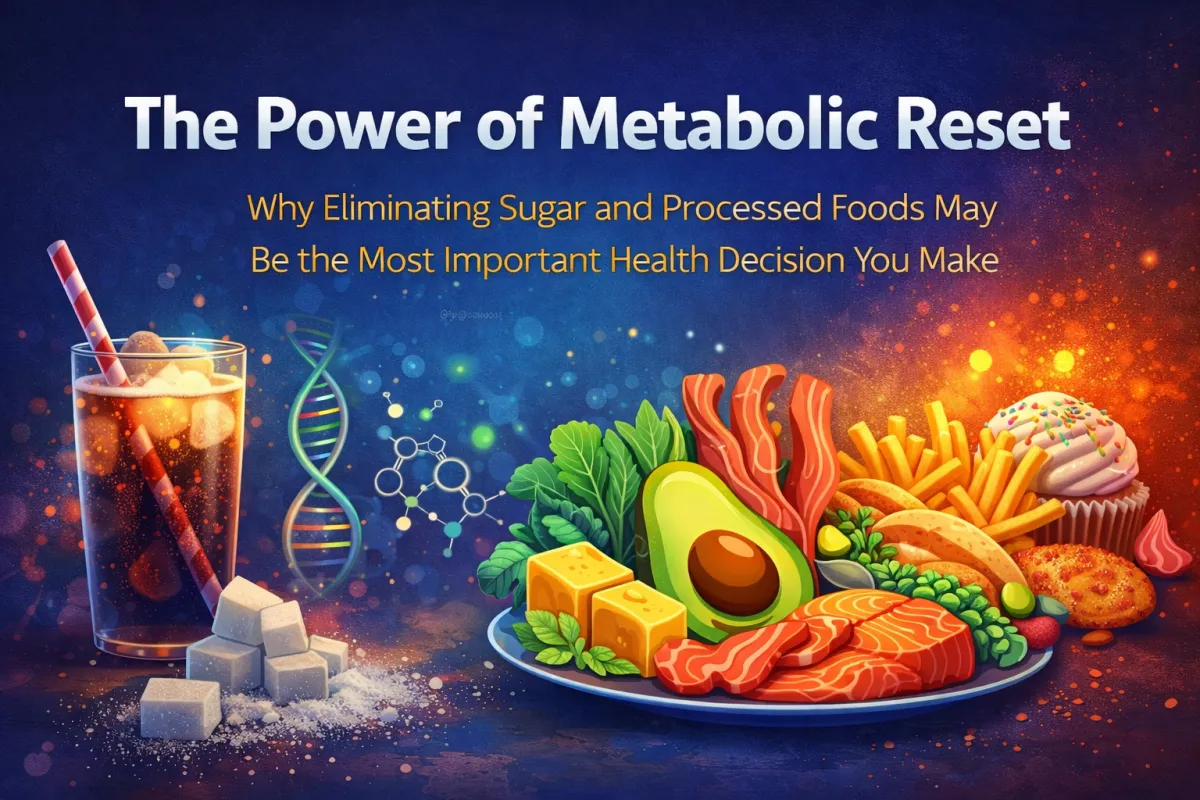
The Power of Metabolic Reset
Why Eliminating Sugar and Processed Foods May Be the Most Important Health Decision You Make
For decades, nutrition advice centered around calorie counting and portion control.
Yet modern research continues to point toward a deeper issue driving many of today’s chronic health challenges:
Metabolic dysfunction.
From fatigue and weight gain to inflammation and cognitive decline, the foods most commonly consumed in modern diets — refined sugar and ultra-processed foods — place significant stress on the body’s metabolic systems.
Adopting a ketogenic approach, combined with removing processed foods, may help restore metabolic balance and support long-term health in ways many people never expect.
Understanding What Sugar Actually Does Inside the Body
Sugar is not inherently evil.
The human body can utilize glucose as fuel.
The problem arises when sugar becomes constant.
Highly processed foods deliver concentrated carbohydrates without fiber, nutrients, or natural slowing mechanisms. This creates rapid spikes in blood sugar followed by crashes that leave many people feeling hungry again within hours.
Repeated spikes force the body to produce large amounts of insulin — the hormone responsible for managing glucose.
Over time, this cycle may contribute to:
Energy instability
Increased fat storage
Inflammation
Hormonal imbalance
Reduced metabolic flexibility
Many individuals don’t realize they are riding this rollercoaster daily.
Fatigue after meals, intense cravings, and afternoon energy crashes are often signs of metabolic stress rather than lack of discipline.
What Happens When You Remove Processed Foods
Processed foods are engineered for convenience and taste — not metabolic health.
They often contain combinations of refined sugars, seed oils, artificial additives, and rapidly digestible carbohydrates that overwhelm natural hunger signals.
When individuals begin removing these foods, several changes often occur:
Stable Energy Levels
Without constant glucose spikes, energy becomes more consistent throughout the day.
Many people report no longer needing afternoon caffeine or frequent snacking.
Reduced Inflammation
Processed ingredients may contribute to systemic inflammation.
Whole-food ketogenic approaches emphasize nutrient-dense foods such as healthy fats, vegetables, quality proteins, and minerals that support recovery.
Improved Hunger Regulation
Protein and fat digestion signals satiety hormones differently than sugar-heavy meals.
People often notice they naturally eat less without feeling deprived.
Why Ketogenic Nutrition Works Differently
A ketogenic diet shifts the body’s primary fuel source from glucose to fat-derived ketones.
Ketones are produced when carbohydrate intake is reduced and stored fat becomes the dominant energy source.
This transition is sometimes called metabolic flexibility.
Instead of relying on frequent carbohydrate intake for energy, the body gains access to stored fuel reserves.
Potential benefits people often experience include:
Sustained mental clarity
Improved focus
Reduced cravings
Better appetite control
More stable mood patterns
Many researchers are also exploring ketones as an efficient fuel source for the brain, particularly during periods of metabolic stress.
The Longevity Connection
One of the most exciting areas of modern nutrition science involves longevity research.
Chronic inflammation and unstable blood sugar regulation have been associated with accelerated aging processes.
When insulin levels remain elevated for long periods, cellular repair pathways may become less efficient.
Ketogenic nutrition strategies may support processes such as:
Improved mitochondrial efficiency
Reduced oxidative stress
Cellular cleanup mechanisms often referred to as autophagy
These processes help maintain cellular function over time.
Longevity is not simply about adding years to life — but preserving cognitive ability, mobility, and independence as those years pass.
Breaking the Sugar Dependency Cycle
One of the biggest challenges people face when transitioning away from sugar is withdrawal from habitual cravings.
Sugar activates reward pathways in the brain.
When removed, it is common to experience temporary fatigue or irritability as the body adjusts.
However, most individuals notice improvements within weeks.
Common feedback includes:
“I stopped thinking about food constantly.”
“I don’t crash anymore.”
“My sleep improved.”
The goal is not restriction.
It is freedom from dependency.
Practical Ways to Begin
Adopting ketogenic principles does not require perfection.
Small consistent changes create meaningful results.
Consider starting with:
Removing sugary beverages.
Prioritizing whole foods over packaged snacks.
Increasing healthy fats such as avocado, olive oil, and nuts.
Choosing protein sources that support satiety.
Eating vegetables rich in minerals and fiber.
Many people benefit from gradual carbohydrate reduction rather than sudden elimination.
Consistency matters more than intensity.
A New Relationship With Food
The Ketobolic philosophy encourages individuals to view food differently.
Food is not simply comfort or convenience.
It is information.
Every meal communicates with your hormones, your brain, and your cells.
By reducing sugar and eliminating highly processed foods, many people rediscover what balanced energy and clarity actually feel like.
Nutrition becomes less about restriction — and more about restoration
Final Thoughts
Modern life makes processed foods easy and metabolic health difficult.
But the human body remains remarkably adaptable.
When provided nutrient-dense foods and stable energy sources, it often begins repairing itself in ways that surprise people.
A ketogenic metabolic approach is not about trends.
It is about supporting how the body was designed to function.
Small changes today may influence not only how you feel tomorrow — but how you age for decades to come.
